Good job! Your press release has been picked up by the newspaper, a success! Of course, you want to share this with your network on Linkedin, Instagram or Facebook. But is that really allowed? In this blog, I tell you what is allowed and what is not allowed.
“Copyright? Copy RIGHT: Steal ideas, steal facts but don't steal words” - Dan Poynter
Getting media success? We'll make sure you have something to celebrate!
Copyright on press releases in the Netherlands: what does disclosure mean?
The first publication of your press release, also known as a disclosure mentioned, is an exclusive right of the author. When you send out your press release to a journalist, the copyright is fully transferred. So the journalist is now the official author. This also includes the right to reproduce, which means making a copy, reproducing or editing a publication.
However, you can choose to send your press release under embargo. This means that you, as the sender, decide when the message can be made public. The journalist may then only publish it after the agreed date and time. Until then, the message remains confidential and you are not allowed to share or distribute it.
Can you share a screenshot of a newspaper article?
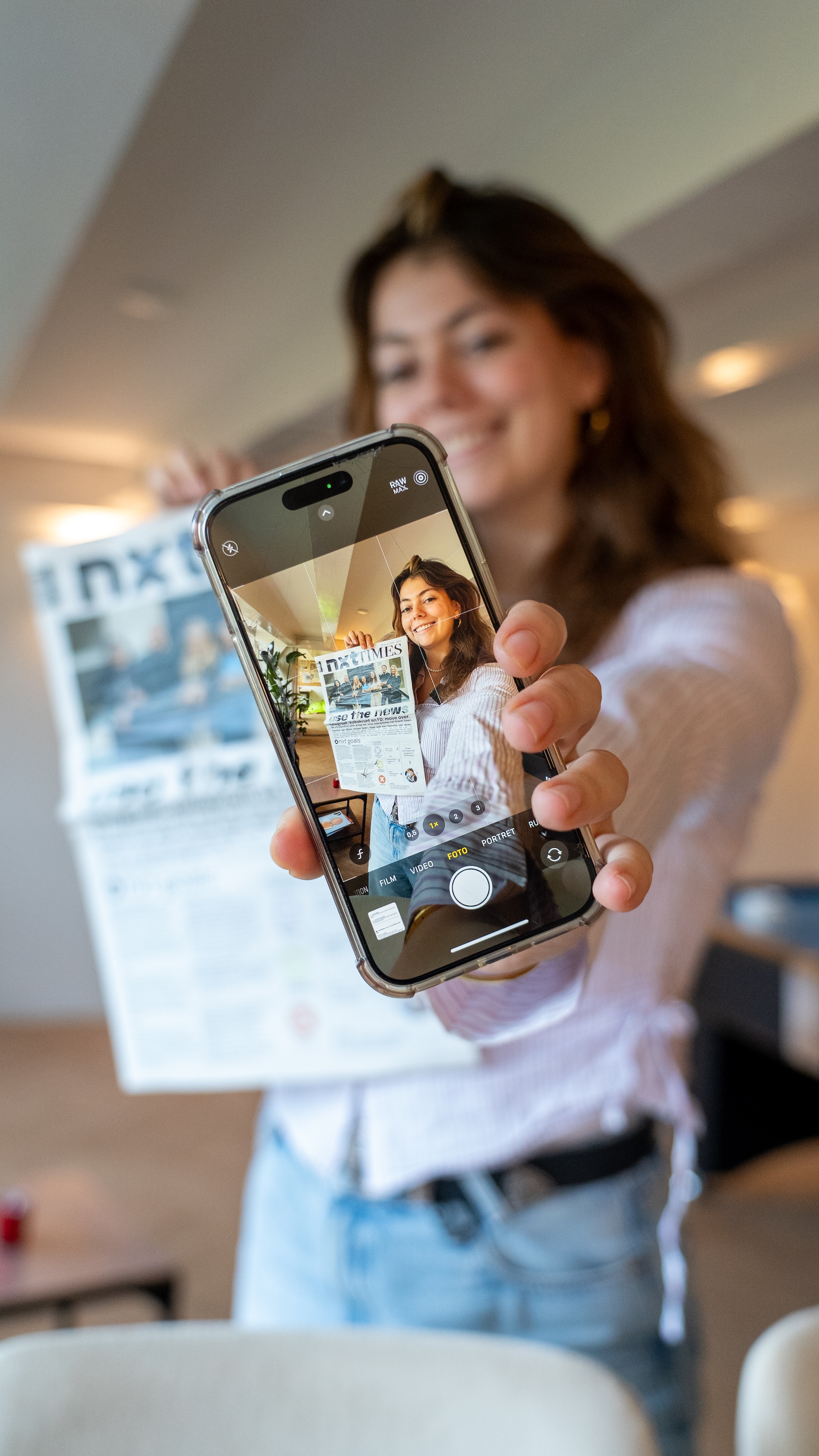
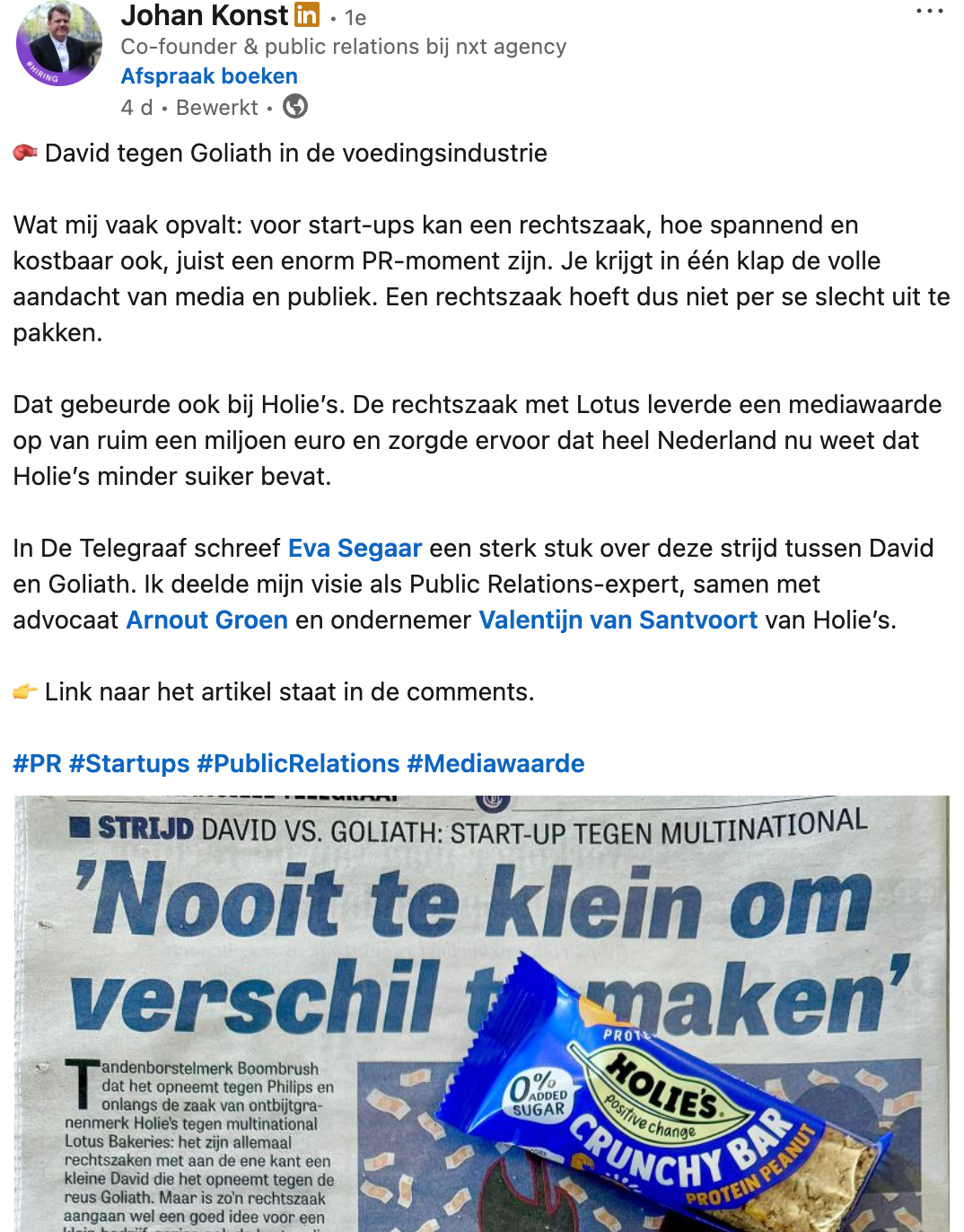
When you share a screenshot or photo of the publication and thus reproduce it, there is secondary disclosure. This is prohibited, especially when you share it with a new audience or if you have a commercial purpose. By reproducing someone's work, you are infringing the intellectual property rights of the journalist concerned. In the event of intentional infringement, the Public Prosecutor's Office can enforce. In severe cases, fines and penalties follow.
We spoke with Joost de Haas, Secretary of the Chief Editor The Telegraph, about one of our customers who made it to the front page and posted about it enthusiastically on Linkedin. “Reproduction or reuse of Telegraph content is only allowed with our prior consent,” says de Haas. Has the corresponding image been provided by a freelancer? Then separate permission is also required. So just sharing a screenshot or photo of an article is not a smart move, even if it includes your press release.
How do you share your press release?
There are a number of ways to still let your network know that your press release has been published:
Quote
What is allowed is to quote a small part of the article, for example to explain something or announce that your press release has been published. This falls under the right to quote. You don't need permission from the journalist to do this.
Please note: the quote should really be limited to what is strictly necessary. There is no fixed limit in the number of words or phrases, but the length of the quote should always be commensurate with the purpose for which you're using it. Sometimes one sentence is enough, other times you need a little more space. As long as it's functional.
In addition, it is important that you always clearly state the source, so that it is clear where the quote comes from. According to the Copyright Act, citing is allowed in the context of, for example, an announcement or a review. So it's okay to let your network know that your press release has appeared in the media, as long as you follow the rules of the right to quote properly.
Direct linking
What is also legal is to share a direct link to the publication. Feel free to mention that your press release is included in the document. This way, you refer people to the original source without copying or distributing the article yourself. And that is entirely according to the rules.
Announce
Of course, you can simply announce that you are in the media on social media without sharing the article yourself. By briefly mentioning that your message has been picked up, you let your network know that you are visible in the press. You are not infringing copyright here.
Request permission
Another option is to simply contact the journalist or editor. You can always kindly ask if you can share a photo or screenshot of the article, for example by linking to the original medium and mentioning the journalist properly. No you have, yes you can get.
Conclusion: Celebrate media success but know the rules
Publicity is valuable, so be proud of your performance! Feel free to share your success with your network, but do it smartly and legally correctly. In case of doubt, ask the journalist for permission.
Wondering how you can measure whether your publication has been successful? Then check out this blog









.png)

